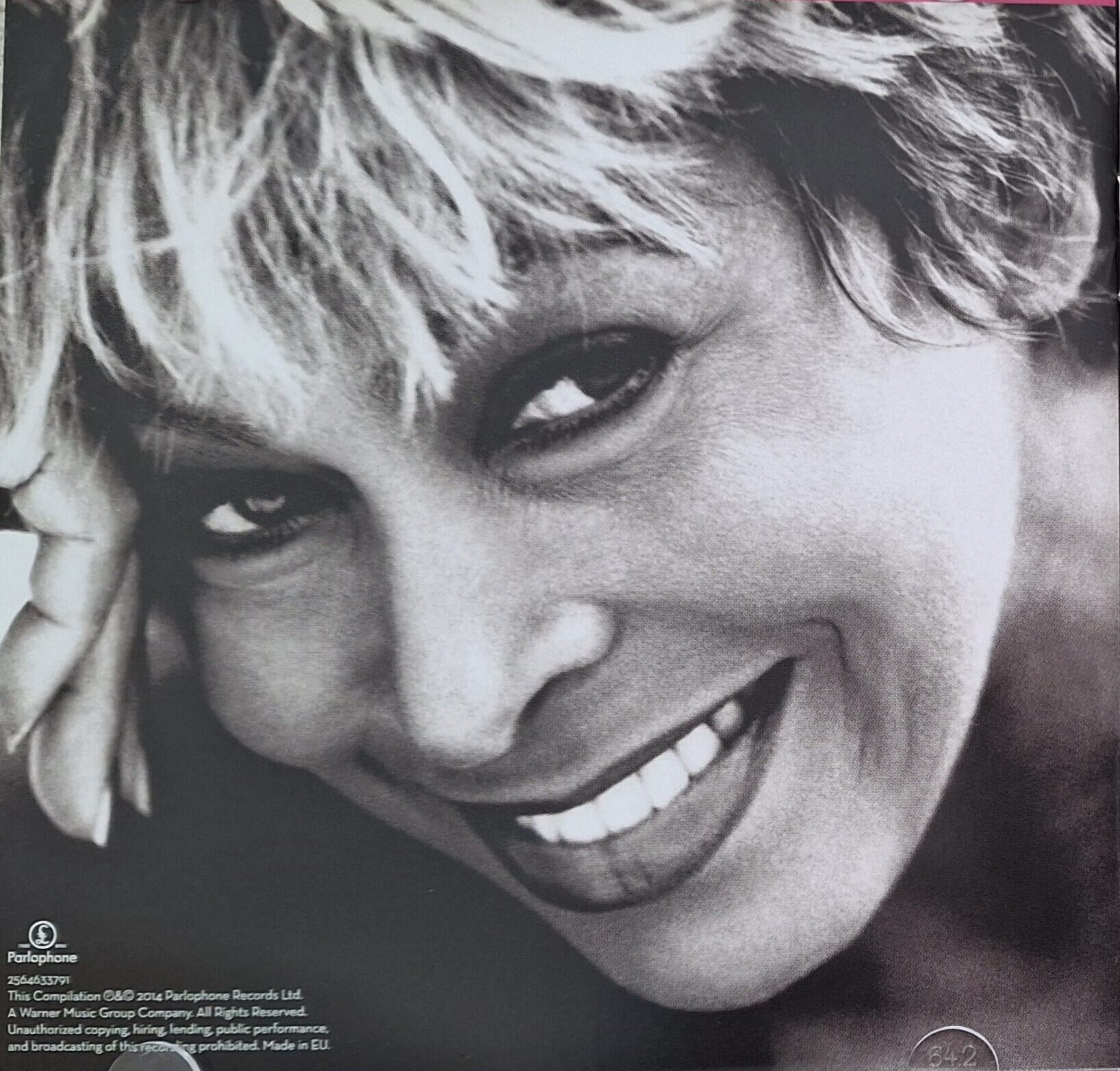
“The Best”: Tina Turner’s Winding Road to the Throne of Rock ’n’ Roll
Never Date an Artist if you’re not prepared to learn the truth about their life story. If you search their heart for answers, you might unearth a world of emotions where trauma and pain are the main characters. Soon, you’ll realise they’ve always been there at the surface, in disguise — behind every smile, every exuberant performance, and the unbreakable will to let the show go on. That was the truth about Anna Mae Bullock, who became Tina Turner 65 years ago. The Queen of Rock ’n’ Roll walked a long and winding road to become simply the best.
Artist – TINA TURNER
Song – “The Best”
Album – Foreign Affair (1989)
It wasn’t a good life. The good did not balance the bad. I had an abusive life; there’s no other way to tell the story. It’s a reality. It’s a truth. That’s what you’ve got, so you have to accept it.
Tina Turner’s words from the 2021 HBO documentary are hard to accept, at least for me. I remember being at the cinema, looking wide-eyed at the big screen when I heard them. I suddenly experienced a pang of reality. One of the most beloved contemporary music legends had an extraordinary life rife with trauma, abuse, lack of love, ill-treatment, pain, despair, and loneliness.
I was aware of that before the documentary. When I was little, my mum mentioned Ms Turner’s painful life story. “How did my mum know?”, I wondered at the time. The fact is, if she knew about the rumours, it means the harrowing details had already travelled the world. Also, “What’s Love Got to Do With It” (1993) was probably one of the films I rewatched the most in the late 1990s. I’m pretty sure the videotape is still lying somewhere. But the thought of watching those scenes in SD makes the story even more dramatic in my head.
It wasn’t a good life…
Anyway, when I say Tina Turner’s words are difficult to accept, I do not wish to devalue or minimise her personal experience. It’s just my way of expressing bewilderment at the irony of the most energetic and lively female performer in the rock era being utterly unhappy and abused in private. Besides a violent husband, Anna Mae Bullock (Tina Turner’s birth name) also had an unloving mother. She, too, was a victim of domestic violence at the hands of Tina Turner’s father.
However, a shared experience of abuse didn’t bring them closer. According to the 1993 biopic and the documentary mentioned above, Zelma (the mother) wasn’t sympathetic to her daughter’s plight later in life. “Mum was not kind”, Tina says in the documentary. “When I became a star, of course, back then she was happy because I bought her a house. I did all kinds of things for her; she was my mother,” she continues. “I was trying to make her comfortable because she didn’t have a husband, she was alone, but she still didn’t like me.”
It makes me sad to think Tina Turner’s life was marked by such a difficult upbringing and unhealthy relationships. She, who gave us so many joyful moments on stage, didn’t receive the same amount of love from those who were supposed to offer it unreservedly. However, despite Tina Turner’s reflection that the good things in her life didn’t balance the bad, I hope her fans’ deep love and appreciation brought her comfort, strength and some happiness in the direst of times.

Tina Turner was simply the best!
Some artists are in a category of their own. Tina Turner is, obviously, a prime example. Royal titles are usually inherited. But in the music business, they must be earned. And Ms Tina deserved all the accolades awarded to her in life and beyond, including the title of Queen of Rock ’n’ Roll.
She inspired new generations of musicians, including those who went on to become big stars themselves. Mick Jagger, for example, admitted that he drew inspiration from Tina’s electrifying performances in the 1960s to shape his stage persona. As Vulture put it quite astutely, contrary to the notion that Tina Turner was a female version of Mick Jagger, the opposite was actually true: Jagger was a male version of Tina Turner.
Tina sold more than 100 million albums worldwide. Do artists from the streaming era even know what that means: selling more than 100 million physical copies of entire albums, not just singles or EPs? Moreover, she was awarded a dozen Grammys (barely enough, in my opinion) and sold out multiple arenas around the world. Speaking of which, do you remember when Tina performed to a record-breaking audience of around 188 thousand people in Rio de Janeiro in 1988? Mind-blowing!
Another interesting fact: Tina Turner appeared on the cover of Rolling Stone’s second issue (25 November 1967), making her the first female artist to be featured. And if you’d like to find her star on the Hollywood Walk of Fame, the address is 1750 N. Vine Street. It’s been there since 1986.
An extraordinary career summarised in one song: “The Best”
While listening to Tina Turner’s greatest hits soon after learning of her passing at 83, I realised that her signature song “The Best” perfectly summarises her career. It’s all in the lyrics! Although they seem to praise somebody else, possibly a love interest, the irony is that they say everything Tina Turner’s fans thought about her:
You’re simply the best
Better than all the rest
Better than anyone
Anyone I’ve ever met
I’m stuck on your heart
I hang on every word you say
Tear us apart
Baby, I would rather be dead
This could be a love letter from any fan to Ms Tina (minus the last line – too dramatic)!
I didn’t have the pleasure, or perhaps ‘blessing’ is a more appropriate word, of seeing Ms Tina perform live. But I remember watching her concerts on TV as a child, mesmerised. How did she do it? How could she maintain such high energy and hit all the notes with that raspy voice?
Raw entertainment
Tina Turner on stage was raw entertainment. The amount of physical effort she put into each performance was incredible. But it only revealed itself through the sweat pouring from her face — James Brown style. Other than that, she breezed through her shows without showing a hint of fatigue. At least, that’s how I remember it. Again, how did she do it?
Nobody danced, sang and performed like she did. And her voice? Unique is an understatement. Her voice is a reflection of her own life: rough, gritty, and hard to replicate. It was never nice and easy; it was nice and rough.
Even her abusive first husband couldn’t deny her talent. That’s why Ike Turner honed Anna Mae Bullock’s vocal abilities when she joined him to form the Ike & Tina Turner duo. Her stage name debuted in July 1960 with the release of “A Fool in Love”.
Side note: Apparently, Ike trademarked the name “Tina Turner” so another singer could perform under it if the original Tina ever left the band. And Tina did leave (the band and the marriage), and, quite rightly, took the name with her.
Tina Turner’s spirit animal: the phoenix!
Forget the horse in the video (The Best): Tina Turner’s spirit animal was the phoenix. Following her divorce from Ike Turner in 1978, Tina famously walked away with just two cars and her stage name. She knew the latter was the key to getting her life back on track.
It took some time, hard work, intensive Buddhist chanting, and an incredibly positive mindset. Still, Tina Turner accomplished an almost impossible feat: at age 44, she staged one of the most spectacular comebacks in music history.
After years of playing small venues and striving for a new opportunity in the music industry, she finally got one from Capitol Records in 1983. However, it came with a caveat: the record label gave her two weeks to record a new album. Even in today’s technological reality, that’s a pretty tall order! But Tina couldn’t afford to miss the chance of a lifetime. Therefore, she recorded the album that would set her out on the journey of becoming a music icon. On 29 May 1984, the Queen of Rock released Private Dancer.
Private Dancer: a musical rebirth
Besides the title track, “What’s Love Got to Do with It” and her rendition of Al Green’s “Let’s Stay Together” are two other defining songs from Private Dancer. Although Turner was Ike’s surname, with this album, Tina finally claimed it for herself, breaking free from a past that brought her both fame and profound pain.
When I first saw Tina on TV with her powerful voice, hair whipping, syncopated movements, and body blazing with soul, I immediately knew I was witnessing a rare solo performance. When I learned she used to sing in a duo, I couldn’t imagine what role the other person even played. Her presence filled the whole stage.
Following Private Dancer, she released more celebrated works, including her participation in Mad Max: Beyond Thunderdome (both the film and soundtrack, 1985), as well as the albums Break Every Rule (1986) and Foreign Affair (1989). The latter, her last studio album for Capitol, includes one of her most iconic songs: “The Best.”
It became a stadium anthem, and it was at stadium concerts where Tina Turner excelled: she had an aura of relaxed, but energetic perfection when she stepped onto the stage. If I could experience a moment in the past, attending a Tina Turner concert would be one of them. Did you hear that, Genie’s lamp?
Electrifying and superhuman are the two words that come to mind when I think about that live show I watched as a child – even without HD!
P.S. When I grew up, I developed a serious crush on Tina Turner’s saxophonist!
I’m curious:
- What’s your favourite Tina Turner song?
- How did you feel when you heard her say It wasn’t a good life?
- Do you think Angela Bassett should have won the Oscar (and that’s a hill you’re willing to die on)?
Feel free to speak your mind: that’s what the comment section below is for! And since you’re at it, join the Never Date an Artist community and stay up to date.
Carla Vicente

Music and sun lover. I live for good weather, food, beauty, inspiration, and deciphering the complexity of human relations. Unharnessed creativity is a blessing, and I'm deeply grateful for mine. My world is made of innumerable words in different languages, with multiple figures of speech. Subtlety is an art form. Directness... a work in progress. Silence: the space where loud and creative thoughts gain shape and prosper.